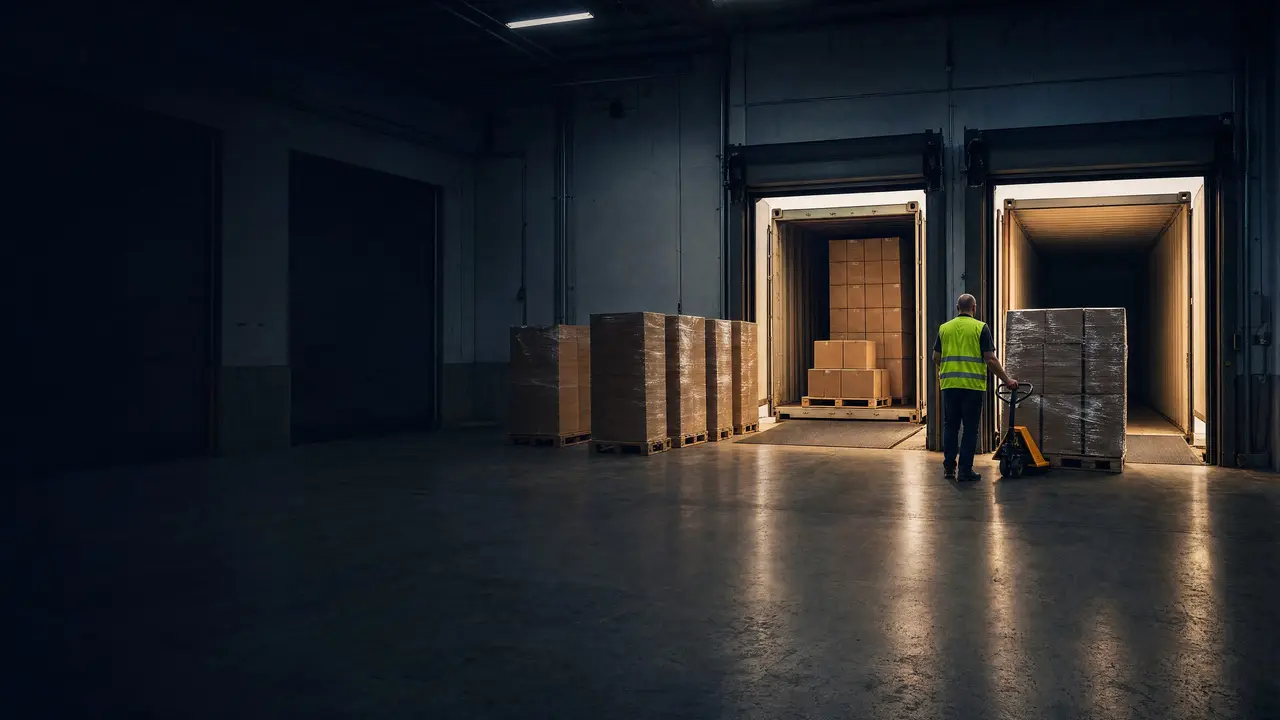
What is cross docking?
Cross docking services move freight from an inbound truck, trailer or container onto outbound trucks with little or no time in storage. The name comes from the dock itself: goods cross from the receiving side to the shipping side instead of going into racks.
In a supply chain, cross docking is how you break a big inbound load into smaller outbound ones, or combine small inbound loads into one larger shipment, without paying to store anything in between. In trucking, a cross dock is a terminal where loads transfer between trucks. A cross dock warehouse does the same job with room to sort, repalletize and label along the way.
When does cross docking save money?
- Breaking a load. A full container or truckload arrives and splits into store deliveries, LTL shipments or customer drops.
- Consolidating. Several supplier deliveries combine into one outbound truckload, so you pay for one long move instead of several partial ones.
- Skipping storage. If freight already has a buyer and a ship date, put-away and storage add cost and days without adding anything.
- Changing equipment. Freight on a 53 ft trailer that cannot reach a store with no dock moves onto a box truck with a liftgate.
Cross docking stops saving money when inbound and outbound timing do not line up. Then freight waits, and waiting is storage. We price that as pallet storage rather than calling it a cross dock.
How a cross dock works at our warehouse
- You send the details first. Bill of lading or packing list, carton and pallet counts, and where each piece is going, by PO, store or SKU.
- We receive and count. Freight is unloaded and checked against the paperwork, and any shortage or damage is written up before it moves on.
- We sort and build. Freight is sorted by destination, repalletized where needed and labeled for the outbound carrier.
- It leaves. On a local box truck or a final mile delivery across Los Angeles County with Alvy as the carrier, on your own carrier from our dock, or as LTL shipping or a full truckload beyond Southern California, arranged through Accurate Freight Systems LLC, the licensed property broker in our group.
Turn time depends on when the outbound move is booked. Tell us the outbound date when you send the inbound details, and we plan the dock around it.
Transloading, devanning and container unloading
Transloading means moving freight from one piece of equipment to another, usually from an ocean container onto a domestic trailer or truck, so the container can go back and the goods can carry on. Devanning is the unloading part: emptying a container, often of floor-loaded cartons, and building the freight onto pallets.
Container unloading is quoted per container, because a floor-loaded 40 ft box and a palletized one are different jobs. Floor-loaded containers come off by hand, carton by carton, and building those cartons onto pallets can add project labor from $38 an hour; palletized containers come off faster. The freight can then cross-dock out, go into storage, or split between the two.
Be clear on the location before you book. The warehouse is in Valencia, 60 to 65 miles by road from the ports of Los Angeles and Long Beach. We do not provide drayage: the container arrives on your forwarder’s or drayage carrier’s truck, and we unload it. That suits freight heading north or inland anyway: to the Central Valley, Northern California, the high desert, or customers across north Los Angeles County. It does not suit a port-side transload where the goal is to strip a container within sight of the terminal and return it the same day. For that, a building next to the port is the better answer, and we would rather tell you now.
Freight still moving in bond cannot come here either. Clear customs first, because this is not a bonded warehouse.
Cross docking vs transloading vs storage
| Cross docking | Transloading | Storage | |
|---|---|---|---|
| What moves | Inbound trucks to outbound trucks | Ocean container to a domestic trailer or truck | Freight into racks or floor positions |
| Time in the building | Little or none | Little or none | Weeks, months or longer |
| Typical use | Breaking or consolidating loads | Ocean freight changing to road equipment | Inventory waiting for orders |
| Starting at | $12 per pallet in, $12 out | Unload quoted per container, then $12 per pallet out | $25 per pallet per month |
What to send for a cross-dock quote
For the inbound side, send the equipment (40 ft container, 53 ft trailer or box truck), whether it is floor-loaded or palletized, carton and pallet counts, and the commodity. For the outbound side, send the destinations, the dates and how each load should leave. With that, a coordinator can price the handling, any project labor and the outbound freight in one quote. Phone (661) 344-8766 on weekdays from 8am to 8pm Pacific, or send the details through request a quote and get a written quote before the freight moves.
Cross-docking runs alongside our other warehousing services in Valencia.