What is UN3373, biological substance Category B?
UN3373 is the number the federal Hazardous Materials Table gives “Biological substance, Category B”, a Division 6.2 infectious substance. Most pages on medical courier requirements are written for drivers. This one is for the lab, clinic or practice that ships specimens and wants to know what the rules ask of each side.
Federal rules at 49 CFR 173.134 define a Category B infectious substance as one “that is not in a form generally capable of causing permanent disability or life-threatening or fatal disease in otherwise healthy humans or animals when exposure to it occurs.” Category A covers substances capable of that harm, with different UN numbers and stricter packaging under 49 CFR 173.196. Regulated medical waste is also separate, under UN3291.
Is every specimen UN3373?
No. Section 173.134(b) lists materials that are not regulated as Division 6.2 at all, including material unlikely to cause disease, non-infectious biological materials, blood collected for transfusion, and dried blood spots on filter paper. Deciding whether a specimen is Category A, Category B or excepted is the shipper’s call, made by someone who knows the specimen and the patient.
One exception touches couriers directly. Under 173.134(b)(10), a patient sample that is not Category A is excepted when “transported by a private or contract carrier in a motor vehicle used exclusively to transport such materials.” Medical equipment and lab products may ride along if properly packaged. A courier vehicle that also carries general freight does not meet that test, so a Category B specimen on it travels packed and marked as UN3373.
How do you package UN3373 specimens?
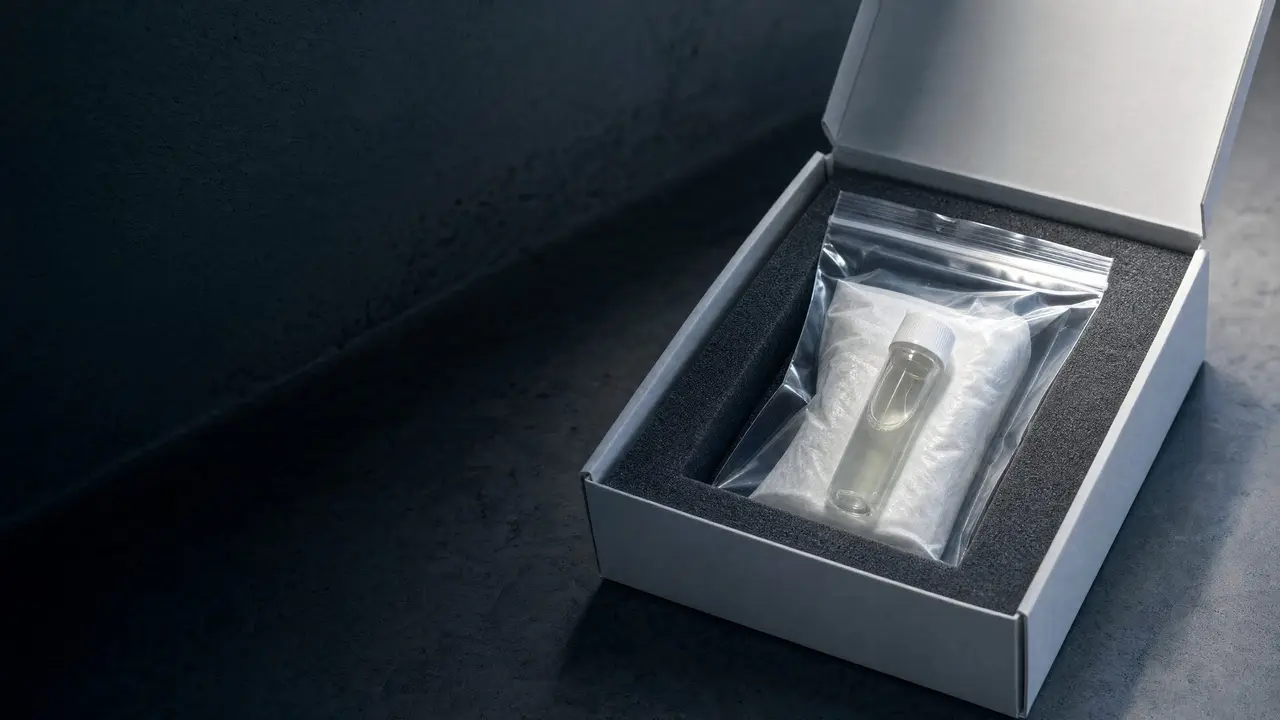
49 CFR 173.199 requires triple packaging. When a Category B specimen is packed this way, it is excepted from the rest of the Hazardous Materials Regulations, apart from incident reporting and an air cargo location rule.
| Layer | What 49 CFR 173.199 requires |
|---|---|
| Primary receptacle | Leakproof for liquids, siftproof for solids. Fragile tubes wrapped or separated so they cannot touch. |
| Absorbent (liquids) | Between the primary and secondary, enough to absorb the entire contents. |
| Secondary packaging | Leakproof (liquids) or siftproof (solids). The primary must not be able to break, be punctured or leak into it in normal transport. |
| Outer packaging | Rigid, with cushioning. At least one surface 100 mm x 100 mm. The completed package must pass a 1.2 m drop test. |
| By aircraft only | Liquids: primary or secondary withstands a 95 kPa pressure differential, with up to 1 L per primary receptacle and 4 L per outer package. Solids: up to 4 kg per outer package. Ice or dry ice does not count toward these limits. |
The packaging maker must supply filling and closing instructions, and packages “must be filled and closed in accordance with” them. Buy UN3373 kits from a supplier and follow its instructions exactly. In the UN Model Regulations and the international air rules, the same triple packaging is Packing Instruction P650 (WHO guidance).
What goes on the UN3373 label and the outside of the box?
What people call the UN3373 label is a required mark:
- The UN3373 diamond. A square-on-point mark on a contrasting background, each side at least 50 mm, border line at least 2 mm wide, letters and numbers at least 6 mm high.
- The proper shipping name next to the diamond, in letters at least 6 mm high.
- A responsible person. The name and phone number of someone knowledgeable about the material, or with immediate access to such a person, on a document such as a bill of lading or on the outer packaging. The phone must be monitored during business hours.
- Overpacks. If packages go inside an overpack, the marks must be visible or reproduced on the outside.
Who packs the specimen, and what must the courier know?
| The shipper (lab, clinic, practice) | The courier |
|---|---|
| Classifies the specimen: Category A, Category B or excepted | Knows the 173.199 requirements, as 173.199(e) requires |
| Packs it in triple packaging, per the kit instructions | Recognizes a correctly packed and marked package |
| Marks the UN3373 diamond and proper shipping name | Flags a leaking, damaged or unmarked package before taking it |
| Adds ice or dry ice, if needed, and marks it | Keeps the package secured in the vehicle |
| Names a responsible person with a phone number | Follows the shipper’s handoff and custody instructions |
Shipping specimens with dry ice
Under 173.199(d), ice or dry ice goes outside the secondary packaging or in an overpack, with interior supports holding the secondary in place. With dry ice, the outer packaging must let carbon dioxide gas escape, and the package is marked “Carbon dioxide, solid” or “Dry ice” with an indication that the contents are for diagnostic or treatment purposes. Air adds more: under 49 CFR 173.217(c), the net weight of the dry ice must be marked on the package, and the shipper must make arrangements with the aircraft operator for each shipment.
What does OSHA’s bloodborne pathogens standard require?
OSHA’s Bloodborne Pathogens Standard, 29 CFR 1910.1030, applies to occupational exposure to blood or other potentially infectious materials. It sets duties for employers; OSHA does not certify couriers. Where employees have reasonably anticipated exposure, the employer must:
- Keep a written Exposure Control Plan, reviewed at least once a year.
- Offer the hepatitis B vaccination series at no cost, within 10 working days of initial assignment.
- Train employees at initial assignment and at least annually, during working hours, and keep training records for 3 years.
The standard also requires specimens to travel in a container that prevents leakage, closed and labeled or color-coded before transport, which normally happens where the specimen is collected. Whether a driver who only carries sealed packages has occupational exposure is a determination each employer makes. Ask any courier how it handles exposure for the drivers, employees or contractors, who will carry your specimens.
Does HIPAA apply to a specimen courier?
Specimens travel with labels and requisitions that carry patient information. In its FAQ on business associates, HHS says a covered entity does not need a business associate contract with the US Postal Service, certain private couriers and their electronic equivalents that act merely as conduits. A conduit transports information but does not access it except on a random or infrequent basis as needed for the transportation service or as required by law. If a courier does more than carry sealed items, your compliance team decides whether a business associate agreement is needed.
Why is chain of custody important for specimens?
Chain of custody means documenting every handoff of a specimen, by name and time, from collection to testing. It lets the lab show that the sample it tested is the one collected, intact. In DOT-regulated drug testing the record is formal: the specimen travels with a Federal Drug Testing Custody and Control Form, and a missing form or a broken or tampered bottle seal is a “fatal flaw” that always cancels the test (49 CFR 40.199). Clinical and research labs set their own requirements, so ask the receiving lab what it needs. From the courier, that usually means names, times and signatures at each handoff, with the package left sealed.
What to ask any medical courier
- Do your drivers know the UN3373 packaging and marking rules, and what do they do with a leaking or unmarked package?
- How do you handle bloodborne pathogen exposure for drivers on specimen routes?
- How is custody recorded at each handoff, and can we get the records?
- Do specimens share the vehicle with general freight?
- What happens when a pickup is missed or the receiving lab is closed?
- Will you sign our business associate agreement if our compliance team requires one?
Shipping lab specimens by courier: how we carry them
We carry shipper-packed specimens from Fresno and Santa Barbara to Los Angeles, Orange County, the Inland Empire and San Diego, on scheduled lab pickups and same-day runs. Your lab or clinic packs and marks each specimen; our drivers carry the sealed packages. Drivers on our specimen routes are trained in bloodborne pathogens, with training records on file. When your lab’s process requires it, the driver signs the custody form or delivery receipt at each handoff, as the driver or carrier, never as the shipper. Category A substances and other hazardous materials are outside what we carry. Car runs start at $45 for the first 20 miles, and routes are quoted after a look at your stops. See medical courier service, healthcare logistics and same-day courier, or request a quote.