What is apparel fulfillment?
Apparel fulfillment is the storage and shipping side of a clothing brand: receiving production, storing it by style, size and color, picking and packing ecommerce orders, shipping wholesale orders to stores, and getting returns back on the shelf. Clothing fulfillment is not harder because the goods are fragile. It is harder because of the numbers. One style becomes dozens of SKUs, and a real share of orders come back. Fashion fulfillment adds timing: drops and seasons decide when stock lands and when orders spike.
Alvy Logistics provides apparel fulfillment services and apparel warehousing from one 58,000 sq ft warehouse in Valencia, California, on the I-5 north of Los Angeles. Apparel is on the building’s accepted list, and footwear and accessories store as general merchandise.
Clothing fulfillment by size and color: why apparel has so many SKUs
A single T-shirt in six sizes and five colors is 30 SKUs. Twenty styles like that make 600. Each SKU needs its own barcode, its own storage location and an accurate count, because a picker who grabs the size next to the right one creates a return.
What we need from you, and what we set up:
- A barcode on every unit or poly bag, matching the SKU in your order system. If production arrives without them, labeling is a special project at $38 an hour.
- Cartons packed by SKU. Mixed cartons from the factory have to be sorted before put-away, which adds time at receiving.
- A SKU list with style, size and color. Your store connects through the Logiwa client portal (Shopify, for example), and stock by size shows there, so you can see a size running low before it sells out.
A deep size run spreads stock across many cartons, so we size storage from your SKU list and units on hand rather than guessing. Pallet storage starts at $25 per pallet per month.
Apparel warehousing: flat, boxed or hanging?
Our standard is folded garments in poly bags, stored in cartons by SKU. It suits T-shirts, knits, activewear, denim, swimwear, socks and most accessories.
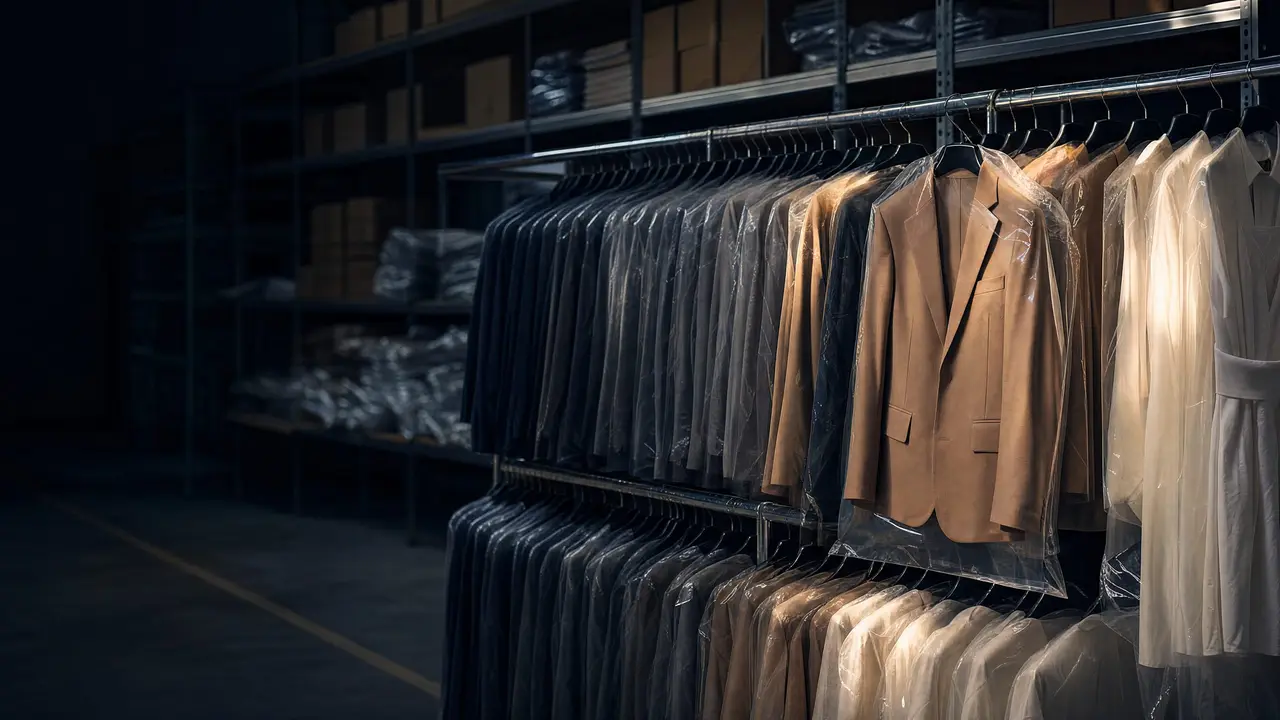
Some garments need to stay on hangers, such as tailored jackets, dresses and outerwear that must arrive without creases. Those go into hanging storage, so they stay on the hanger from receiving until they are packed. Tell us which styles hang and how many units when you request a quote, so the space is planned before the goods arrive.
Footwear and accessories
Footwear ships in its retail box and is stored and picked by size like any other SKU, which is most of what footwear fulfillment services need. Hats, bags and belts follow the same rules as garments, so garment fulfillment and accessory orders run as one workflow rather than two.
Clothing returns and size exchanges
Fit drives clothing returns, so write your rules down before launch: what counts as sellable, what to do with worn, stained or untagged items, and when a size exchange ships. Returns come back to Valencia and are checked, restocked or set aside to those rules, with refolding or a new tag billed at $38 an hour; our reverse logistics services page covers each step.
Wholesale to boutiques and retailers
Many apparel brands sell to boutiques and department stores alongside their own site. Wholesale orders ship from the same inventory, usually as size runs or prepacks by the carton. Boutique orders tend to be small and mixed, which is close to ecommerce picking. Larger retail orders ship by the carton or pallet and follow the retailer’s routing guide. See B2B and wholesale fulfillment for routing guides, GS1-128 labels, advance ship notices and EDI.
If a retailer wants prepacks built (a set ratio of sizes in one carton) or display packs, that is kitting and assembly work.
What to look for in an apparel 3PL
An apparel 3PL should store by style, size and color without mixing near-identical SKUs, keep hanging and folded stock apart, get returns back on the shelf while the size still sells, and ship wholesale orders to the retailer’s routing guide from the same inventory as online orders. Ask any clothing 3PL how it handles size exchanges and how returned items are graded. Garment fulfillment here includes hanging storage for pieces that ship on hangers, with pallet storage from $25 a month and order processing from $5 per order.
Fashion fulfillment for drops, launches and seasonal peaks
Apparel volume is lumpy. A product drop can ship a week of orders in a day, and holiday can run several times a normal week. Our terms are not annual-only, so you can add space for a season and give it back afterwards. For overflow stock between collections, see short-term storage.
Before you request an apparel fulfillment quote
- A month of ecommerce orders, with units per order
- Your SKU list (styles, sizes, colors) and units on hand
- How production arrives: parcel, pallet or floor-loaded container
- Your return rate and return rules
- Boutique and department store accounts, with any routing guides
- Any garments that need to stay on hangers
The volume where a clothing 3PL pays off is a few hundred to several thousand orders a month. For how each order moves through the building, see pick and pack services. Send the list through the quote form or call (661) 344-8766 for a written quote.