What is B2B fulfillment?
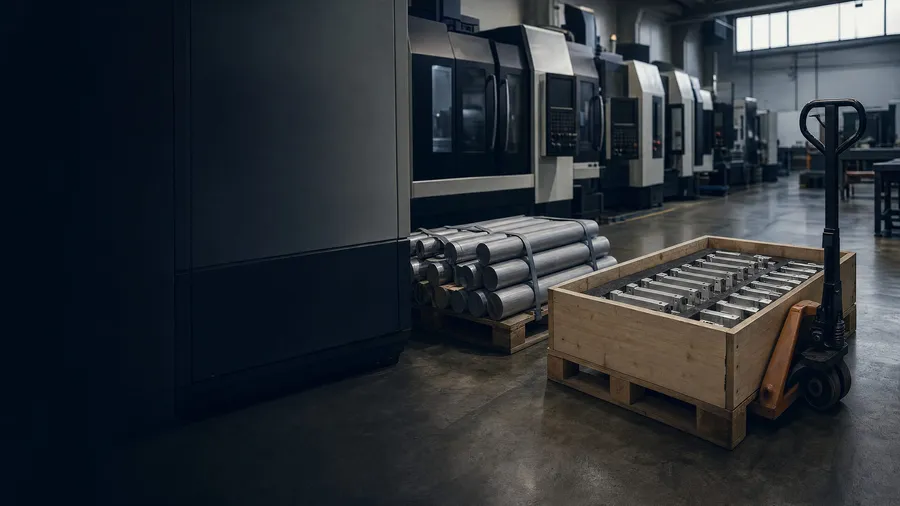
B2B fulfillment services cover the warehouse work behind orders that go to another business instead of a shopper. A boutique reorders four cartons. A regional chain sends a purchase order for twelve pallets split across three distribution centers. A distributor needs a mixed pallet shipped to its own customer without your name on it. Each order is bigger than an ecommerce parcel, and each comes with rules: how cartons are labeled, which documents travel with the freight, and when the truck may arrive.
Wholesale fulfillment, retail fulfillment and retail distribution services describe the same job from different sides. Retail fulfillment usually means keeping stores stocked: opening orders and replenishment shipped to a retailer’s stores or distribution centers, on the retailer’s terms. A B2B 3PL like Alvy Logistics stores the inventory, picks it by the carton or pallet, labels and documents it for the buyer and gets it on the right truck.
How B2B differs from B2C fulfillment
| B2C (ecommerce) | B2B (wholesale and retail) | |
|---|---|---|
| Who receives it | An individual shopper | A store, distribution center or distributor |
| Order size | One to a few units | Cartons to full pallets |
| Picked by | The unit | The unit, carton or pallet |
| Labeling | A carrier label | Carton and pallet labels to the buyer’s spec |
| Shipping | Parcel | Parcel, LTL or truckload, often by appointment |
| Paperwork | Packing slip | Packing list, bill of lading, ship notices |
Plenty of brands sell both ways. With us, wholesale and ecommerce orders come out of the same stock in one Valencia building, and both show in the Logiwa client portal.
Retail fulfillment: what is retail compliance?
Retail compliance means shipping the way each retailer’s rules require. Most large retailers publish those rules as a routing guide, sometimes called a vendor compliance manual. It sets carton sizes and weights, label placement, what goes on the packing list, how pallets are built, how to request a delivery appointment and which carriers to use. When a shipment breaks a rule, the retailer charges a fee, called a chargeback, and deducts it from what it pays you.
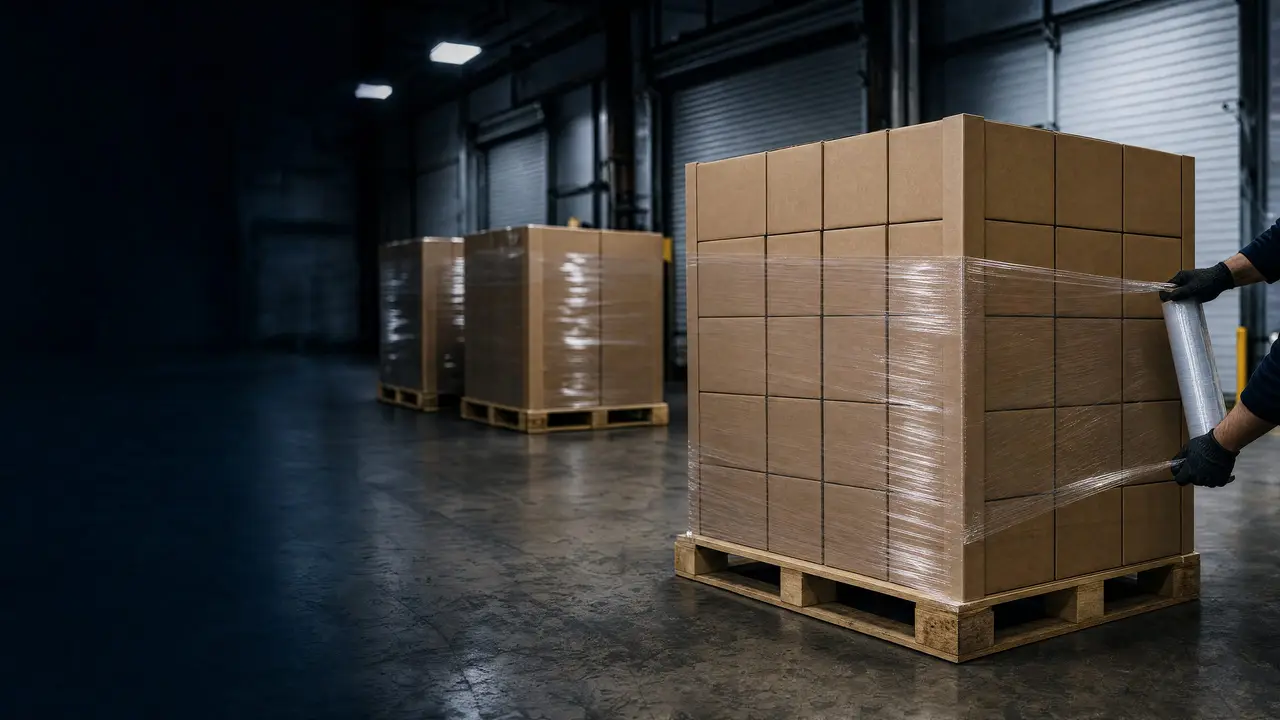
We ship to each retailer’s routing guide. That covers serialized GS1-128 carton labels built from purchase order data, advance ship notices, pallet builds to the retailer’s spec and EDI with the trading partners that require it. Send each guide with your quote request and we go through it with you before the first order, so the choices that are yours to make (carton counts, label data, carriers the retailer names) are settled up front and a chargeback is not how you find out.
Wholesale fulfillment: case pick, pallet pick and mixed orders
Wholesale orders come in three shapes, and each takes a different amount of handling:
- Full pallet. A pallet of one SKU leaves the way it arrived. The simplest order to handle, at $12 per pallet out.
- Case pick. Full cartons of several SKUs, picked and built onto a pallet or shipped as cartons.
- Mixed or unit pick. Boutique orders often mix sizes and colors in small quantities, which is closer to ecommerce picking. Clothing wholesale usually works this way: see apparel fulfillment.
Retailers that want prepacks or display-ready cases need them built before the order ships. That is kitting work, covered on kitting and assembly.
EDI fulfillment: what does EDI mean in logistics?
EDI (electronic data interchange) is how large retailers send purchase orders, and expect advance ship notices back, as structured data instead of email. In the X12 standard most US retailers use, those are the 850 and the 856. EDI fulfillment means the warehouse works straight from those documents: the purchase order comes in, the order is picked and labeled to the routing guide, and the advance ship notice goes back when the shipment leaves Valencia. We handle EDI for retail trading partners that require it, so with a 3PL that has EDI in place, nobody rekeys orders or ship notices by hand. Tell us your trading partners when you request a quote, so each connection is set up during onboarding.
Getting wholesale orders to the buyer
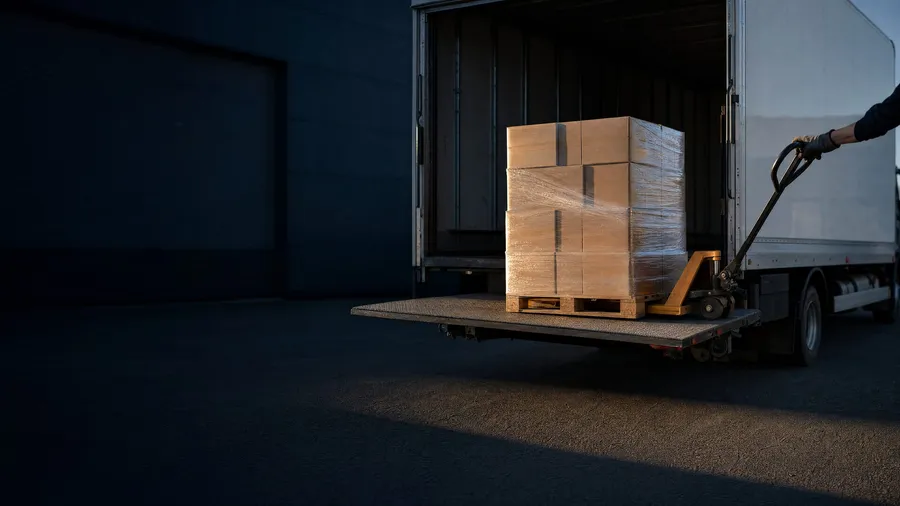
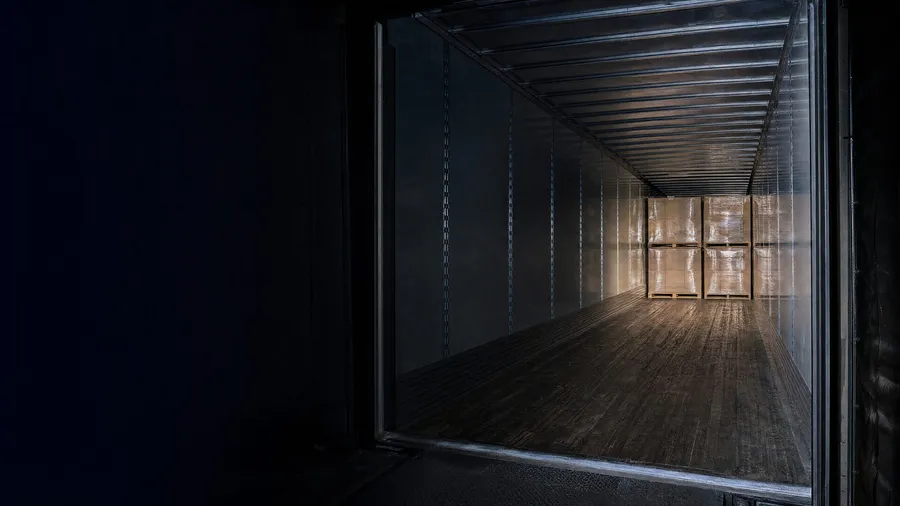
Cartons can ship by parcel. Inside Southern California, pallets can go by box truck with a liftgate as pallet shipping, hauled on Alvy’s own carrier authority. LTL and truckload to retailers beyond Southern California are arranged through Accurate Freight Systems LLC, the licensed property broker in our group, and quoted per job. Valencia sits on the I-5 north of Los Angeles, and ground carriers reach most of the West in one to two days. Distribution centers receive by appointment, so pickups are scheduled around the delivery window on the purchase order.
A worked example from the rate cards: two pallets to a store in downtown Los Angeles, about 40 miles from Valencia, start at $24 in outbound handling (2 pallets at $12), $5 in order processing and $200 for the box truck’s first 20 miles. After the first 20 miles, mileage can start as low as $1.20 a mile, depending on the vehicle and the route, and it is set on your written quote. A liftgate or any wait time is added only when the job needs it and listed on the same quote.
What to look for in a B2B 3PL
A B2B 3PL should build cartons and pallets to each retailer’s routing guide, print GS1-128 labels, send advance ship notices and handle 3PL EDI, and ship wholesale and ecommerce orders from one inventory so stock is never split. Ask how it books freight for retailer appointments too: here, local deliveries go by Alvy box truck and longer lanes by LTL or truckload through Accurate Freight Systems LLC, the licensed property broker in our group. Retailer returns come back through our reverse logistics services, and pallet handling starts at $12 in and $12 out.
What we need to quote B2B fulfillment
- Your list of retail buyers and their routing guides
- A sample month of wholesale orders: cartons, pallets and units per order
- Your SKU count, and whether stock arrives by parcel, pallet or container
- Your EDI trading partners and the documents each one expects
- Your ecommerce volume, if the same stock serves both
The fit is wholesale volume that moves by the pallet, often alongside a few hundred to several thousand ecommerce orders a month. For store deliveries and replenishment, see retail logistics. Send the list through the quote form or call (661) 344-8766, and you get a written quote that names every charge.